By Saqib S. Qureshi
Senior Correspondent | A1 TV Pakistan
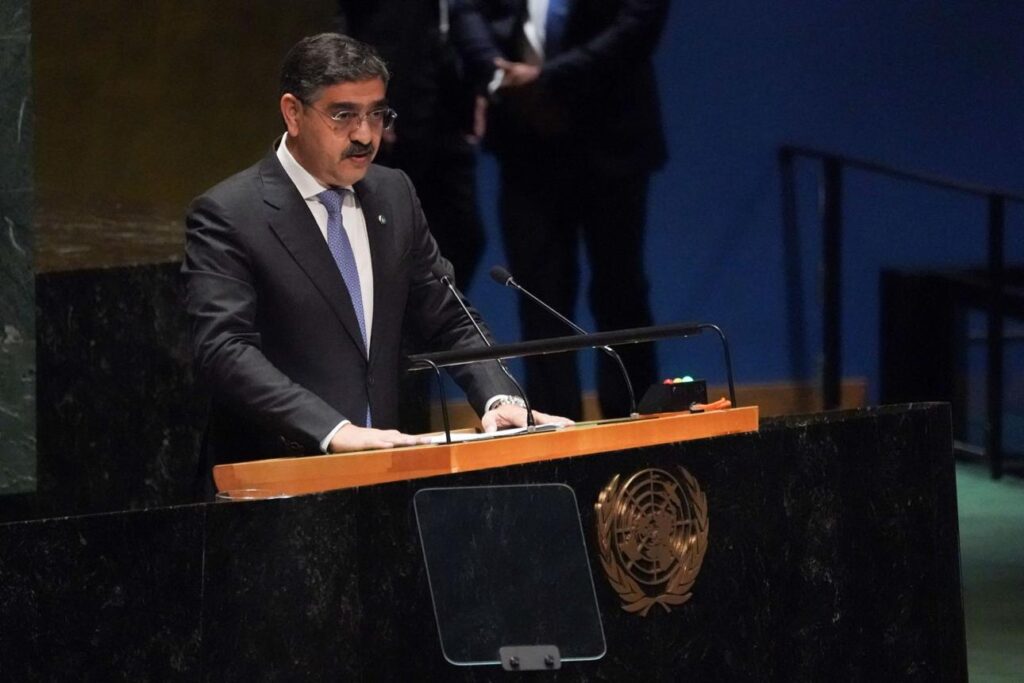
UNITED NATIONS, NEW YORK, Sept. 20, 2023 — Pakistan’s caretaker Prime Minister Anwaar-ul-Haq Kakar called for a stronger and more equitable international system to confront future pandemics, warning that the failures exposed by COVID-19 must not be repeated when the next global health emergency strikes.
Kakar addressed the United Nations High-level Meeting on Pandemic Prevention, Preparedness and Response in New York during the 78th session of the General Assembly.
The gathering, held on September 20, was the UN General Assembly’s first high-level meeting devoted specifically to pandemic prevention, preparedness and response. Its central theme was maintaining political momentum and international solidarity before another global health crisis emerges.
For Pakistan, the debate carried particular significance. COVID-19 had demonstrated how rapidly a health emergency could become an economic and social crisis, while Pakistan’s devastating 2022 floods had subsequently exposed how climate disasters can place additional pressure on public-health systems.
Kakar’s message was that future preparedness could not depend on emergency action after disaster had already struck.
The international community needed a system capable of acting before a crisis spiraled out of control.
COVID-19 Exposed a Deep Global Divide
The pandemic produced extraordinary scientific achievements, including the rapid development of vaccines.
But it also exposed profound inequalities.
Wealthier countries were able to secure enormous quantities of vaccines and medical supplies while many developing nations struggled for access.
That failure was explicitly acknowledged by the UN leadership at the September meeting. Deputy Secretary-General Amina Mohammed, delivering remarks on behalf of Secretary-General António Guterres, said vaccines had been developed in record time but were hoarded by richer countries while people in poorer nations went without.
The consequences extended far beyond hospitals.
COVID-19 pushed the Sustainable Development Goals further off course, increased poverty and hunger, aggravated debt problems in developing countries and deepened existing inequalities.
For Pakistan and other developing states, those experiences strengthened the argument that pandemic preparedness must include equitable access, not merely the ability to develop medicines quickly.
Pakistan Pushes for Binding International Obligations
A central element of Kakar’s position was the need to turn lessons from COVID-19 into durable international commitments.
Pakistan supported stronger global arrangements for pandemic prevention and response, including obligations capable of ensuring that countries cooperate when another major health emergency emerges.
The underlying concern was clear: voluntary promises made during a crisis may not be sufficient when governments are competing for limited vaccines, medicines, diagnostic equipment and other essential supplies.
A future system would therefore need to address not only surveillance and emergency response but also how lifesaving medical products are produced, financed and distributed.
The issue was particularly important for developing countries without the manufacturing capacity or financial resources available to wealthier states.
Equity Must Be Built Before the Next Emergency
The UN meeting itself placed equity at the center of the debate.
One of its two major panels focused on governance and accountability, while the other addressed capacity-building and the need for timely, sustainable and innovative financing and investment for pandemic preparedness.
That distinction matters.
Countries cannot suddenly create laboratories, surveillance networks, trained medical personnel, emergency supply chains and manufacturing capacity after a dangerous pathogen has already begun spreading.
Preparedness requires investment before an emergency.
For lower-income and developing economies, however, maintaining that infrastructure can be difficult when governments are simultaneously financing debt payments, education, food security, climate adaptation and basic development.
Pandemic preparedness therefore becomes inseparable from the larger question of development finance.
Pakistan Had Already Learned the Cost of a Global Health Emergency
Pakistan entered the debate with direct experience of COVID-19.
During the early phase of the pandemic, the country launched a coordinated preparedness and response programme involving federal and provincial authorities, the United Nations and the World Health Organization.
That strategy included surveillance, contact tracing, quarantine and isolation capacity, public awareness and mechanisms for coordinating the national response.
But the pandemic demonstrated that national preparedness alone has limits.
Viruses cross borders.
Supply chains are international.
Vaccines and medicines can depend on manufacturing facilities thousands of miles from the countries that ultimately need them.
No country can completely isolate itself from a pandemic spreading through the rest of the world.
That reality strengthened Pakistan’s case for treating pandemic preparedness as a collective international responsibility.
Health Security and Climate Vulnerability Converge
Pakistan’s argument also needs to be understood against another crisis confronting the country at the time: climate change.
The catastrophic 2022 floods had damaged infrastructure, displaced millions and created enormous humanitarian and health challenges.
The combination of climate vulnerability and pandemic risk illustrates a larger threat facing developing countries.
A country does not necessarily confront emergencies one at a time.
A future infectious-disease outbreak could coincide with floods, extreme heat, food insecurity, displacement or economic crisis — multiplying pressure on hospitals and public institutions.
Resilient health systems therefore need to be capable of operating through overlapping emergencies rather than preparing exclusively for a repeat of COVID-19.
The World Was Already Losing Its Sense of Urgency
Perhaps the greatest danger confronting pandemic preparedness in September 2023 was political complacency.
COVID-19 no longer dominated daily life in much of the world.
Borders had reopened. Restrictions had disappeared. International travel had resumed.
But the conditions capable of producing another pandemic had not disappeared.
The UN high-level meeting was specifically designed to preserve political momentum and solidarity around pandemic preparedness rather than allowing governments to forget the lessons of COVID-19.
That made Kakar’s intervention part of a much larger international debate.
Would governments invest in preparedness while memories of COVID-19 remained fresh — or wait until another emergency forced them to act?By Saqib S. Qureshi
Senior Correspondent | A1 TV Pakistan
UNITED NATIONS, NEW YORK, Sept. 20, 2023 — Pakistan’s caretaker Prime Minister Anwaar-ul-Haq Kakar called for a stronger and more equitable international system to confront future pandemics, warning that the failures exposed by COVID-19 must not be repeated when the next global health emergency strikes.
Kakar addressed the United Nations High-level Meeting on Pandemic Prevention, Preparedness and Response in New York during the 78th session of the General Assembly.
The gathering, held on September 20, was the UN General Assembly’s first high-level meeting devoted specifically to pandemic prevention, preparedness and response. Its central theme was maintaining political momentum and international solidarity before another global health crisis emerges.
For Pakistan, the debate carried particular significance. COVID-19 had demonstrated how rapidly a health emergency could become an economic and social crisis, while Pakistan’s devastating 2022 floods had subsequently exposed how climate disasters can place additional pressure on public-health systems.
Kakar’s message was that future preparedness could not depend on emergency action after disaster had already struck.
The international community needed a system capable of acting before a crisis spiraled out of control.
COVID-19 Exposed a Deep Global Divide
The pandemic produced extraordinary scientific achievements, including the rapid development of vaccines.
But it also exposed profound inequalities.
Wealthier countries were able to secure enormous quantities of vaccines and medical supplies while many developing nations struggled for access.
That failure was explicitly acknowledged by the UN leadership at the September meeting. Deputy Secretary-General Amina Mohammed, delivering remarks on behalf of Secretary-General António Guterres, said vaccines had been developed in record time but were hoarded by richer countries while people in poorer nations went without.
The consequences extended far beyond hospitals.
COVID-19 pushed the Sustainable Development Goals further off course, increased poverty and hunger, aggravated debt problems in developing countries and deepened existing inequalities.
For Pakistan and other developing states, those experiences strengthened the argument that pandemic preparedness must include equitable access, not merely the ability to develop medicines quickly.
Pakistan Pushes for Binding International Obligations
A central element of Kakar’s position was the need to turn lessons from COVID-19 into durable international commitments.
Pakistan supported stronger global arrangements for pandemic prevention and response, including obligations capable of ensuring that countries cooperate when another major health emergency emerges.
The underlying concern was clear: voluntary promises made during a crisis may not be sufficient when governments are competing for limited vaccines, medicines, diagnostic equipment and other essential supplies.
A future system would therefore need to address not only surveillance and emergency response but also how lifesaving medical products are produced, financed and distributed.
The issue was particularly important for developing countries without the manufacturing capacity or financial resources available to wealthier states.
Equity Must Be Built Before the Next Emergency
The UN meeting itself placed equity at the center of the debate.
One of its two major panels focused on governance and accountability, while the other addressed capacity-building and the need for timely, sustainable and innovative financing and investment for pandemic preparedness.
That distinction matters.
Countries cannot suddenly create laboratories, surveillance networks, trained medical personnel, emergency supply chains and manufacturing capacity after a dangerous pathogen has already begun spreading.
Preparedness requires investment before an emergency.
For lower-income and developing economies, however, maintaining that infrastructure can be difficult when governments are simultaneously financing debt payments, education, food security, climate adaptation and basic development.
Pandemic preparedness therefore becomes inseparable from the larger question of development finance.
Pakistan Had Already Learned the Cost of a Global Health Emergency
Pakistan entered the debate with direct experience of COVID-19.
During the early phase of the pandemic, the country launched a coordinated preparedness and response programme involving federal and provincial authorities, the United Nations and the World Health Organization.
That strategy included surveillance, contact tracing, quarantine and isolation capacity, public awareness and mechanisms for coordinating the national response.
But the pandemic demonstrated that national preparedness alone has limits.
Viruses cross borders.
Supply chains are international.
Vaccines and medicines can depend on manufacturing facilities thousands of miles from the countries that ultimately need them.
No country can completely isolate itself from a pandemic spreading through the rest of the world.
That reality strengthened Pakistan’s case for treating pandemic preparedness as a collective international responsibility.
Health Security and Climate Vulnerability Converge
Pakistan’s argument also needs to be understood against another crisis confronting the country at the time: climate change.
The catastrophic 2022 floods had damaged infrastructure, displaced millions and created enormous humanitarian and health challenges.
The combination of climate vulnerability and pandemic risk illustrates a larger threat facing developing countries.
A country does not necessarily confront emergencies one at a time.
A future infectious-disease outbreak could coincide with floods, extreme heat, food insecurity, displacement or economic crisis — multiplying pressure on hospitals and public institutions.
Resilient health systems therefore need to be capable of operating through overlapping emergencies rather than preparing exclusively for a repeat of COVID-19.
The World Was Already Losing Its Sense of Urgency
Perhaps the greatest danger confronting pandemic preparedness in September 2023 was political complacency.
COVID-19 no longer dominated daily life in much of the world.
Borders had reopened. Restrictions had disappeared. International travel had resumed.
But the conditions capable of producing another pandemic had not disappeared.
The UN high-level meeting was specifically designed to preserve political momentum and solidarity around pandemic preparedness rather than allowing governments to forget the lessons of COVID-19.
That made Kakar’s intervention part of a much larger international debate.
Would governments invest in preparedness while memories of COVID-19 remained fresh — or wait until another emergency forced them to act?