By Shayan Durrani I A1TV Pakistan Bureau Office
September 2023 | Islamabad
ISLAMABAD — Protests over sharply rising electricity bills and record inflation spread across Pakistan in September 2023, putting pressure on the caretaker government as households and businesses struggled with an escalating cost-of-living crisis.
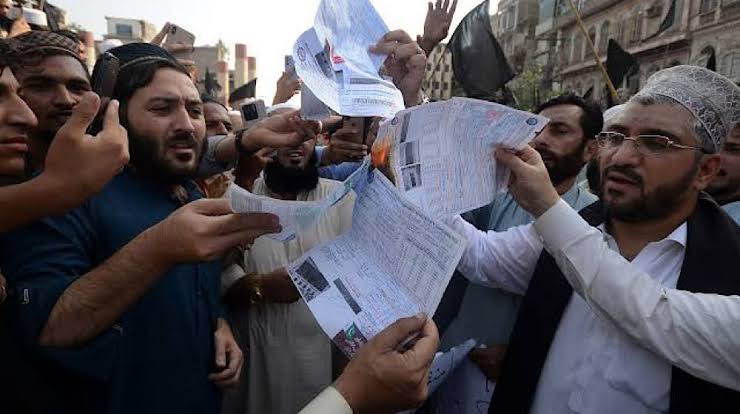
Demonstrations were reported in major cities and towns as consumers protested increases in electricity tariffs, taxes and other charges appearing on monthly power bills. Traders, political groups and civil society organizations also joined protests demanding immediate relief.
Public anger had intensified in late August and continued into September, with protesters in several cities burning electricity bills and gathering outside power distribution company offices.
The crisis posed an early challenge for the caretaker government of Prime Minister Anwaar-ul-Haq Kakar, which had taken office only weeks earlier.
The government considered possible relief measures for electricity consumers but faced significant fiscal constraints because Pakistan was implementing an economic stabilization programme agreed with the International Monetary Fund.
Pakistan had secured a $3 billion IMF Stand-By Arrangement in July 2023. Measures linked to fiscal consolidation and reforms in the power sector limited the government’s room to provide broad subsidies without considering their impact on the programme.
The electricity protests unfolded against a wider inflation crisis.
Pakistan Bureau of Statistics data showed annual consumer inflation at 31.4 percent in September 2023, rising from 27.4 percent in August. Higher fuel and energy costs contributed to the pressure facing households.
Fuel prices became another source of public anger after the caretaker government increased petroleum prices during September.
Political and religious parties sought to capitalize on growing frustration. Jamaat-e-Islami organized protests against rising electricity and fuel costs, including demonstrations and sit-ins demanding that the government withdraw increases and reduce the financial burden on consumers.
Businesses were also affected as higher electricity tariffs increased operating costs, adding to concerns about employment, industrial production and consumer purchasing power.
The caretaker administration maintained that Pakistan faced difficult economic circumstances and that some decisions were necessary to address longstanding problems in the energy sector and meet the country’s financial commitments.
For millions of Pakistanis, however, rapidly increasing utility bills became one of the most visible symbols of the economic crisis.
The September protests highlighted the challenge facing Pakistan’s caretaker government: stabilizing an economy suffering from high inflation and financial pressure while responding to growing public demands for immediate economic relief.